





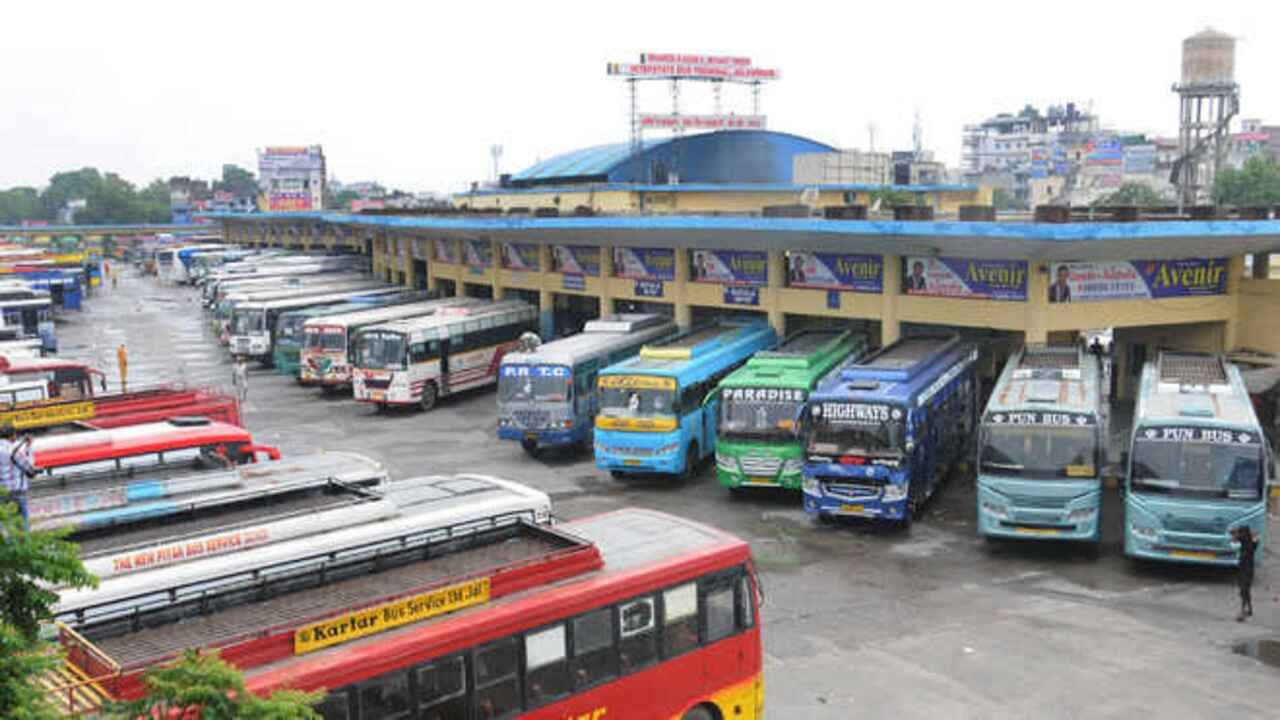
Kashmiri gate bus stand:
The Delhi ISBT Kashmiri Gate, officially known as the Maharana Pratap Inter State Bus Terminus, is one of the largest and most important transport hubs in the National Capital Region (NCR). Located in the northern part of Delhi, this iconic bus station serves as a lifeline for thousands of travelers, connecting the capital city with numerous towns, cities, and states across North India and beyond.
Helpline number for Kashmiri Gate bus stand:
The Kashmiri Gate Bus Stand helpline numbers are: +911122960290, +911122968836, +911123860290.
Kashmiri Gate Bus Stand is located on Lothian Road in Delhi, near exit number 7 of the metro station.
Additional information about Kashmiri Gate bus stand:
- There is always someone available at the reception 24/7.
- Complaints can be registered by calling the landline number.
- If you are in a hurry while traveling, you can also send an SMS to 8587029488 to file a complaint.
- Complaints received via SMS are sent directly to the department officials.
- These complaints are then forwarded to the maintenance agencies responsible for that bus queue shelter.
The history of Kashmiri Gate ISBT –
It is closely linked to the city’s growth and the development of its transportation infrastructure. Established in 1976, the bus terminal was designed to streamline intercity bus travel, reduce congestion in the city center, and provide a centralized departure and arrival point for passengers. Over the years, the terminal has undergone several renovations to modernize its facilities and accommodate the increasing number of travelers.
Geographically, the ISBT Kashmiri Gate is strategically located near the Kashmiri Gate, a historical gateway from the Mughal era, adding a touch of historical significance to the area. Its proximity to landmarks like the Red Fort, Chandni Chowk, and St. James’ Church makes it not only a transportation hub but also a cultural attraction in Delhi.
The ISBT Kashmiri Gate is a spacious and well-designed complex that manages large crowds efficiently. Divided into several sections, each section caters to buses heading to different regions. The terminal serves destinations in Punjab, Haryana, Himachal Pradesh, Uttarakhand, Jammu and Kashmir, Uttar Pradesh, Rajasthan, and even Madhya Pradesh. This smart division helps streamline operations and ensures that passengers can easily locate their buses without any confusion.
One of the standout features of the Kashmiri Gate ISBT is its world-class infrastructure. The terminal building is equipped with modern amenities, including comfortable waiting lounges, clean restrooms, a food court, and ticket counters. Additionally, electronic boards display real-time departure and arrival information, making the travel experience smooth and hassle-free for passengers.
Besides passenger amenities, the bus stand boasts a well-organized transportation management system. The Delhi Integrated Multi-Modal Transit System (DIMTS) ensures smooth operations, focusing on punctuality, safety, and customer satisfaction. The terminal is under constant CCTV surveillance, and the presence of the Delhi Police provides an added layer of security, creating a safe environment for travelers.
A notable feature of the Kashmiri Gate ISBT is its emphasis on cleanliness and sustainability. As part of the Swachh Bharat Abhiyan (Clean India Mission), regular cleaning drives are conducted, and effective waste management practices are implemented. Solar panels installed on the terminal’s roof contribute to energy conservation, reflecting Delhi’s commitment to environmentally friendly infrastructure and green transportation. Beyond its infrastructure and services, the bus stand is a vibrant microcosm of Delhi’s diverse culture. Street vendors selling local snacks, books and magazines, and small kiosks offering travel essentials create a lively and dynamic atmosphere. It’s not just a place to board a bus; for many, it’s where journeys begin, memories are made, and stories are shared.
The Kashmiri Gate ISBT plays a crucial role during peak travel seasons and festivals. During major Indian festivals like Diwali, Holi, and Raksha Bandhan, the terminal witnesses an extraordinary influx of travelers returning home to celebrate with their families. Special arrangements are made to manage this influx, including additional buses, extended ticket counters, and enhanced security measures.
In terms of connectivity, the Kashmiri Gate ISBT is seamlessly integrated with other modes of transport. The Kashmiri Gate Metro Station, an interchange station for the Red, Yellow, and Violet lines of the Delhi Metro, provides easy access from various parts of Delhi and its suburbs. This seamless integration is extremely convenient for travelers who need to switch between road and rail travel.
A key aspect of the terminal’s operational efficiency is its digital integration. The introduction of online ticket booking systems and mobile applications has revolutionized the way people plan their journeys, reducing long queues and making travel more predictable. Many private and government bus operators now offer live tracking, providing passengers with real-time updates on their bus’s location and estimated time of arrival.
Despite its numerous advantages, the Kashmiri Gate ISBT is not without its challenges. The large number of daily commuters often leads to overcrowding, and during the monsoon season, waterlogging in some areas can disrupt operations. Furthermore, like many public transport hubs, the bus station occasionally experiences minor security issues such as pickpocketing, necessitating constant vigilance and improvements in crowd management strategies.
Yet, the Delhi ISBT Kashmiri Gate stands as a testament to the city’s resilience and dynamism. It is a place that embodies movement, where the energy of Delhi merges with the spirit of the countless travelers embarking on their journeys. For tourists, it offers a first glimpse of the organized chaos that defines the city; for daily commuters, it is a familiar and essential part of life.
Looking ahead, plans for further modernization are already underway. The Delhi Transport Corporation (DTC) and the Delhi Development Authority (DDA) have proposed additional infrastructure improvements aimed at making the terminal even more traveler-friendly. These include multi-level parking facilities as part of the city’s green mobility initiative, more comprehensive digital signage, and designated areas for electric buses.
In conclusion, the Delhi ISBT Kashmiri Gate is more than just a bus terminal; it is a vibrant, ever-evolving entity.
Bus platform and destination:
Delhi ISBT Kashmiri Gate bus station: The ISBT is organized with designated platforms for different routes to streamline operations and help passengers find their buses efficiently. A summary of the platforms and their respective destinations is given below:
| Platform Numbers | Destinations | Service Frequency and Timings |
|---|---|---|
| 1 to 6 | Saharanpur, Shamli, Baraut, Baghpat, Rataul | From 5:40 AM to 7:00 PM, every 30 minutes. |
| 7 to 8 | Mandi, Shimla, Chamba, Palampur, Nahan, Dharamshala, Baijnath | 24-hour service with departures every 15 minutes |
| 9 to 10 | Ambala, Chandigarh, Hoshiarpur | 24-hour service with departures every 5 minutes |
| 11 to 12 | Ludhiana, Nangal, Ferozepur | 24-hour service with departures every 30 minutes |
Please note that these times are subject to change. For the most up-to-date schedule, it is advisable to contact the ISBT helpline or visit their official website.
Delhi isbt kashmiri gate bus stand:
Night bus services:
For travelers wishing to travel at night, the Delhi Transport Corporation (DTC) provides night bus services. One such route is 0GL-23, which operates between Maharana Pratap ISBT and Anand Vihar ISBT. This service operates throughout the night with specific departure times. A portion of the schedule is given below:
Delhi isbt kashmiri gate bus stand:
| Maharana Pratap departs from the ISBT. | Departure from Anand Vihar ISBT Terminal |
|---|---|
| 10:20 PM | 9:30 PM |
| 10:40 PM | 9:50 PM |
| 11:00 PM | 10:10 PM |
| 11:10 PM | 10:20 PM |
| 11:25 PM | 10:30 PM |
| 11:30 PM | 10:40 PM |
| 11:35 PM | 10:45 PM |
| 11:40 PM | 10:50 PM |
| 11:50 PM | 11:00 PM |
| 12:00 AM | 11:10 PM |
| 12:10 AM | 11:20 PM |
| 12:15 AM | 11:25 PM |
| 12:20 AM | 11:30 PM |
| 12:30 AM | 11:40 PM |
| 12:40 AM | 11:50 PM |
| 1:00 AM | 12:00 AM |
| 1:05 AM | 12:10 AM |
| 1:10 AM | 12:20 AM |
| 1:15 AM | 12:25 AM |
| 1:20 AM | 12:30 AM |
| 1:30 AM | 12:40 AM |
| 1:40 AM | 12:50 AM |
| 2:00 AM | 1:00 AM |
| 2:20 AM | 1:10 AM |
| 2:40 AM | 1:15 AM |
| 2:50 AM | 1:20 AM |
| 3:00 AM | 1:30 AM |
| 3:05 AM | 1:40 AM |
| 3:10 AM | 1:50 AM |
| 3:15 AM | 2:00 AM |
| 3:20 AM | 2:10 AM |
| 3:30 AM | 2:20 AM |
| 3:35 AM | 2:30 AM |
| 3:40 AM | 2:40 AM |
| 3:45 AM | 2:50 AM |
| 3:55 AM | 3:00 AM |
| 4:00 AM | 3:10 AM |
| 4:05 AM | 3:20 AM |
| 4:10 AM | 3:30 AM |
| 4:15 AM | 3:40 AM |
| 4:25 AM | 3:50 AM |
| 4:40 AM | 4:00 AM |
| 4:50 AM | 4:10 AM |
| 5:00 AM | 4:20 AM |
| 5:05 AM | 4:30 AM |
| 5:10 AM | 4:40 AM |
| 5:15 AM | 4:50 AM |
| 5:20 AM | 5:00 AM |
| 5:30 AM | 5:10 AM |
| 5:35 AM | 5:20 AM |
| 5:40 AM | 5:30 AM |
| 5:45 AM | 5:40 AM |
| 5:50 AM | 5:50 AM |
| 5:55 AM | 6:00 AM |
| 6:00 AM | 6:10 AM |
| 6:07 AM | 6:20 AM |
| 6:10 AM | 6:30 AM |
| 6:17 AM | 6:40 AM |
| 6:20 AM | 6:50 AM |
| 6:25 AM | 7:00 AM |
| 6:27 AM | 7:10 AM |
| 6:30 AM | 7:20 AM |
| 6:34 AM | 7:30 AM |
| 6:35 AM | 7:40 AM |
| 6:36 AM | 7:50 AM |
| 6:37 AM | 8:00 AM |
| 6:40 AM | 8:10 AM |
| 6:45 AM | 8:20 AM |
Delhi isbt kashmiri gate bus stand:
Read also…


